


|
Ar kurjeru visā Latvijā
|
You will be contacted about delivery time. | From 3,99 EUR |
|
|
|||

|
Piegādes punktos
|
You will be contacted about delivery time. | From 3,39 EUR |
 Read more






| Type | Tester; level |
| Voltage, V | 70 — 1000; 1.5 — 9 |
| Battery type | LR44; 2x1.5V; LR44 |
| Length, mm | 140 |
| LED indicators | yes |
| Continuity test, Ω | 0-100 M |
| Conduction test | yes |
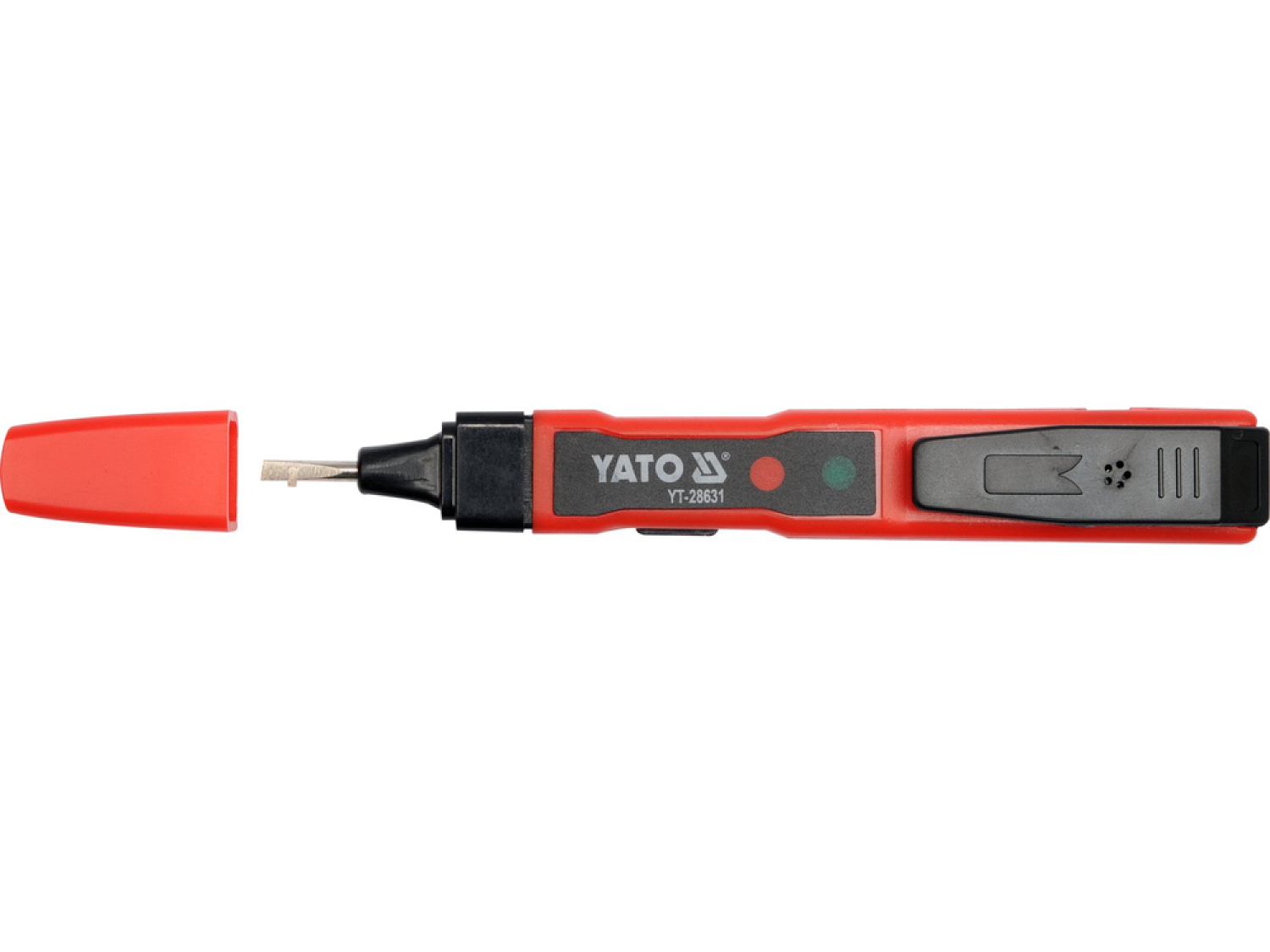
The YATO YT-28631 voltage tester is a versatile tool capable of functioning as both a traditional probe and a non-contact voltage indicator. This device enables users to determine the presence of electrical voltage and detect AC voltage, including behind walls, along with performing wire continuity tests and checking the status of batteries or rechargeable batteries. Voltage presence is indicated by the illumination of one of the diodes located in the tester housing.
FUNCTIONS OF THE TESTER
CONTACT METHOD
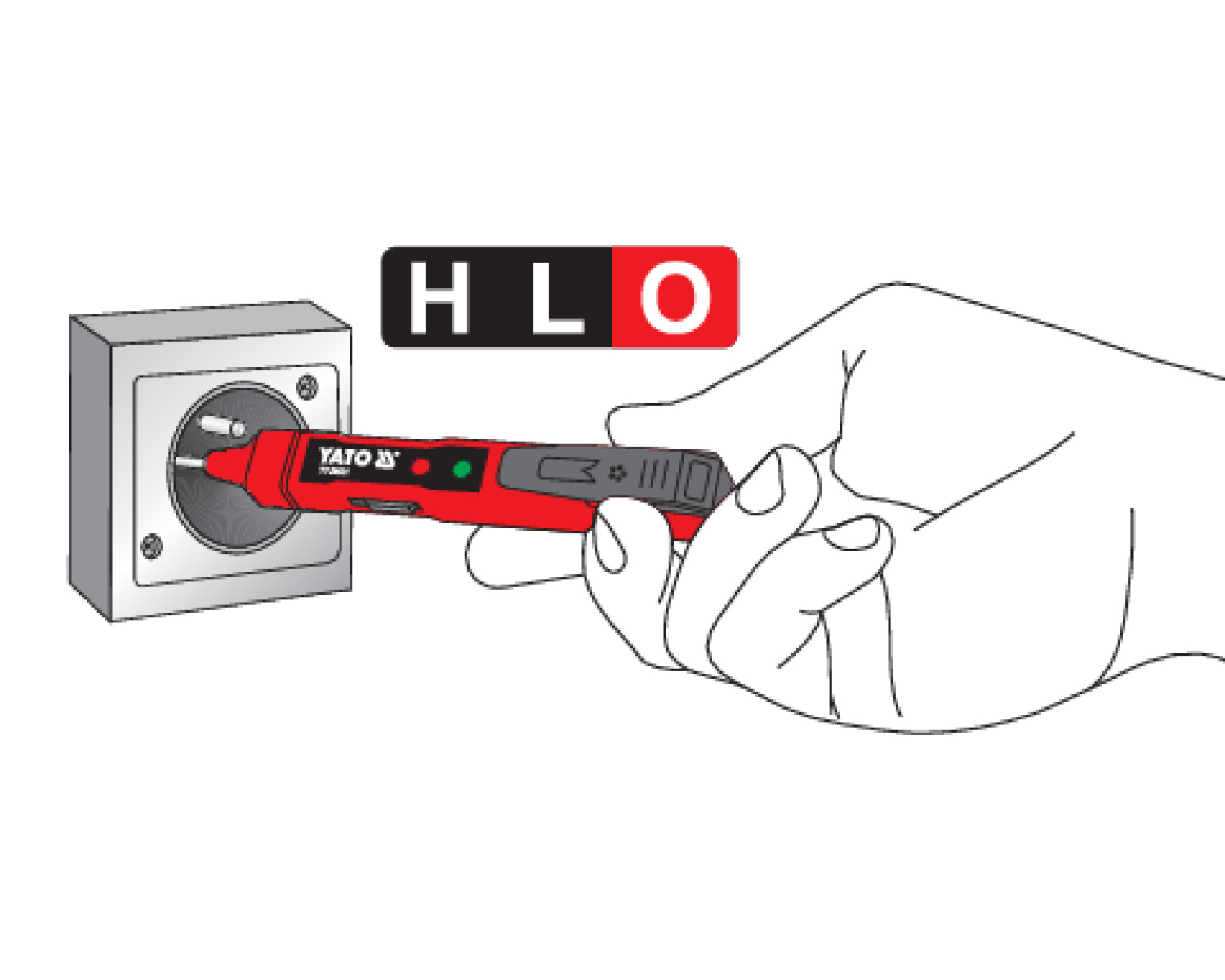
This method allows for voltage detection, battery checking, and continuity testing. To check for voltage in a socket, set the tester to the [O] position, then insert the tester blade into the socket's hole. The illumination of the red LED indicates the presence of voltage. It is not recommended to touch the contact located on the side of the handle while doing this, as it can increase the tester's sensitivity and may falsify the indication.
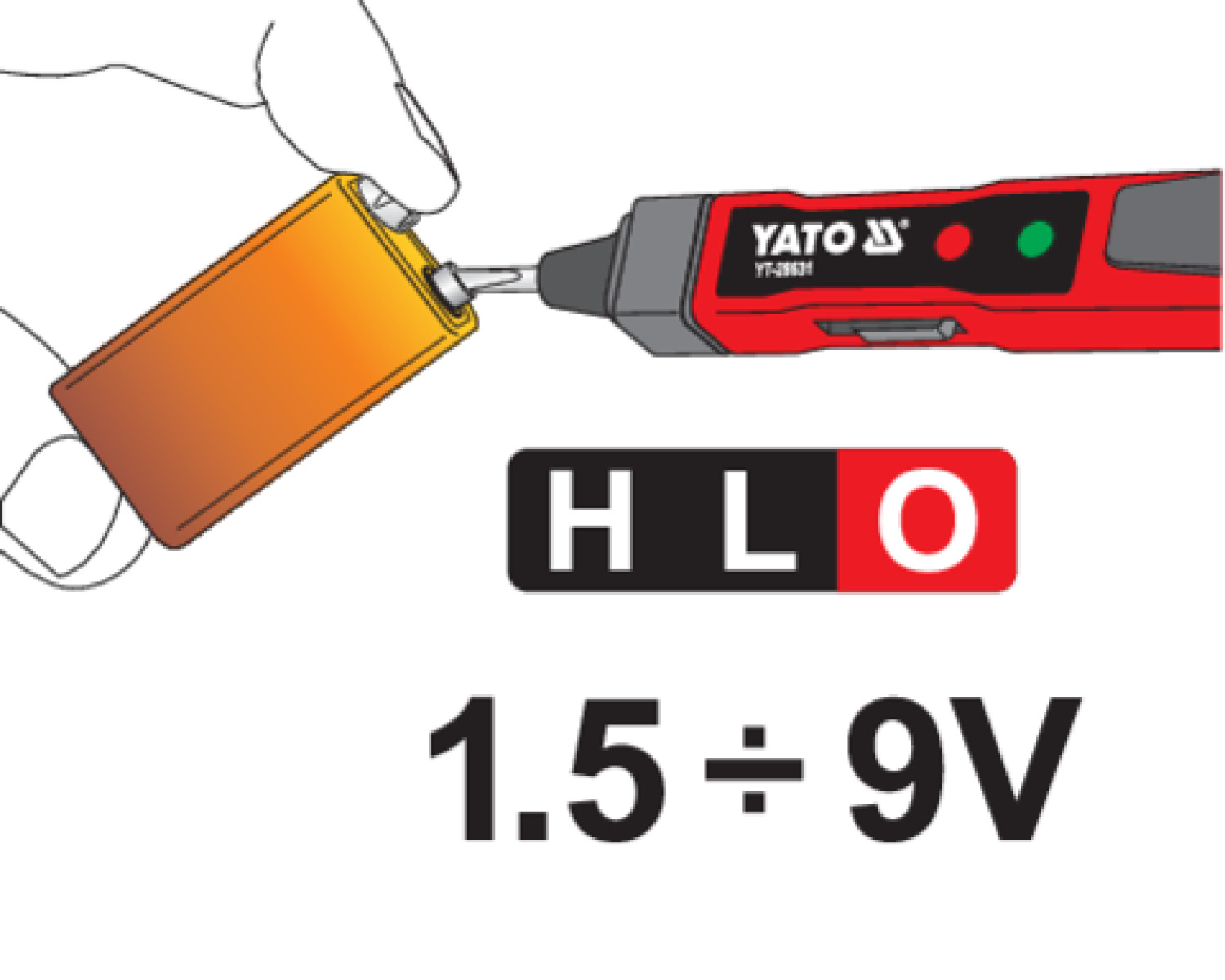
Battery Status Checking
Set the tester to the [O] position. Then, touching the contact on the side of the handle, place the tester blade against the battery terminal marked „+”, and using your other hand, touch the terminal marked „-”. If the LED lights up, it indicates that the battery still has voltage. The tester allows you to check the condition of batteries or rechargeable batteries designed for a range of 1.5V to 9V. Do not use this method for batteries or rechargeable batteries with higher voltage ratings or those connected to an electrical circuit.
TESTING WIRING CONTINUITY
Set the tester to the [O] or [L] position. Then, touching the contact on the side of the handle, apply the tester blade to one stripped end of the wire, and with your other hand, grasp the other stripped end. When set to the [O] position, wire continuity will be indicated by a red LED. The [L] position will illuminate a green LED and emit a sound. It is forbidden to check live wires in a circuit using this method.
INDUCTIVE METHOD
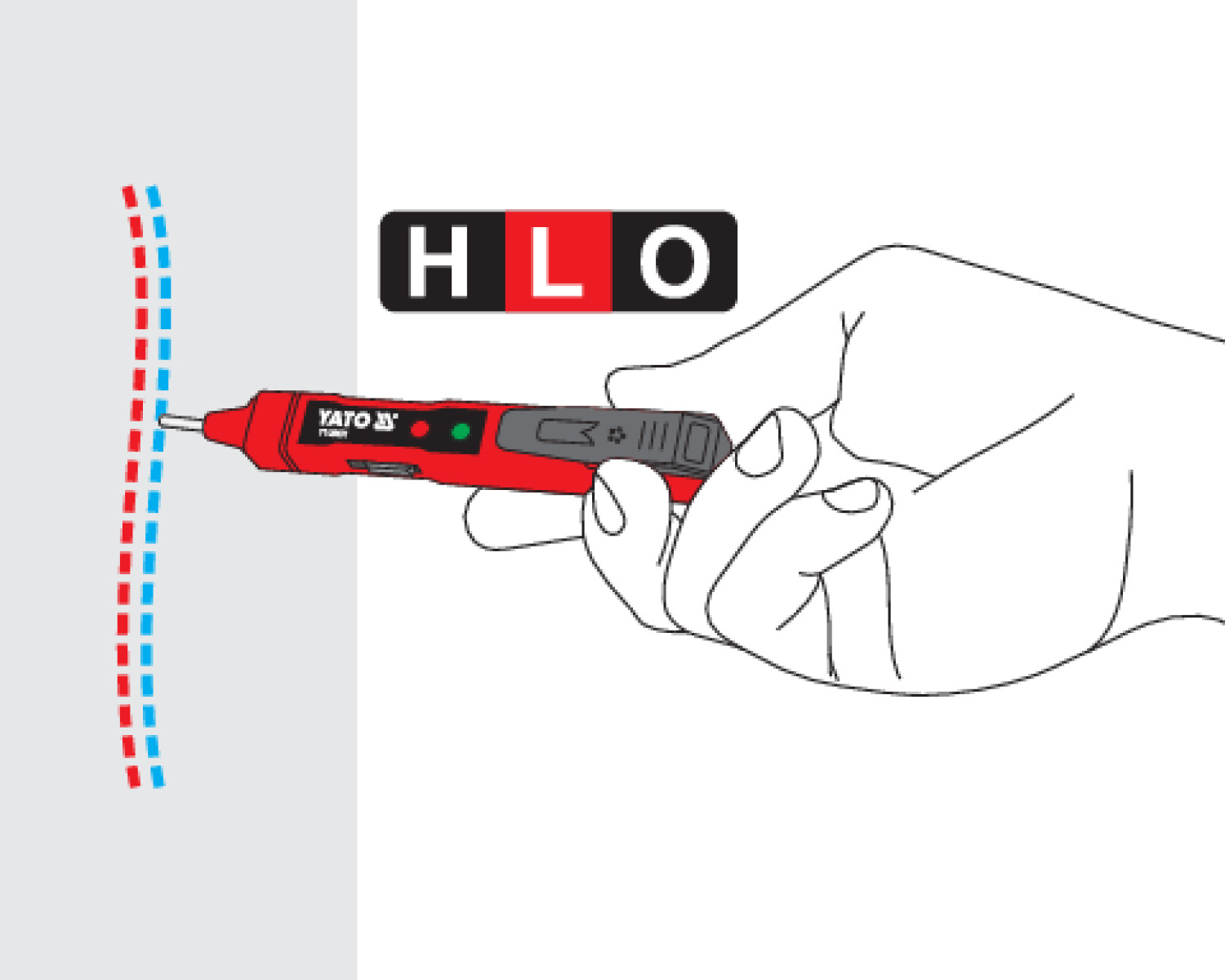
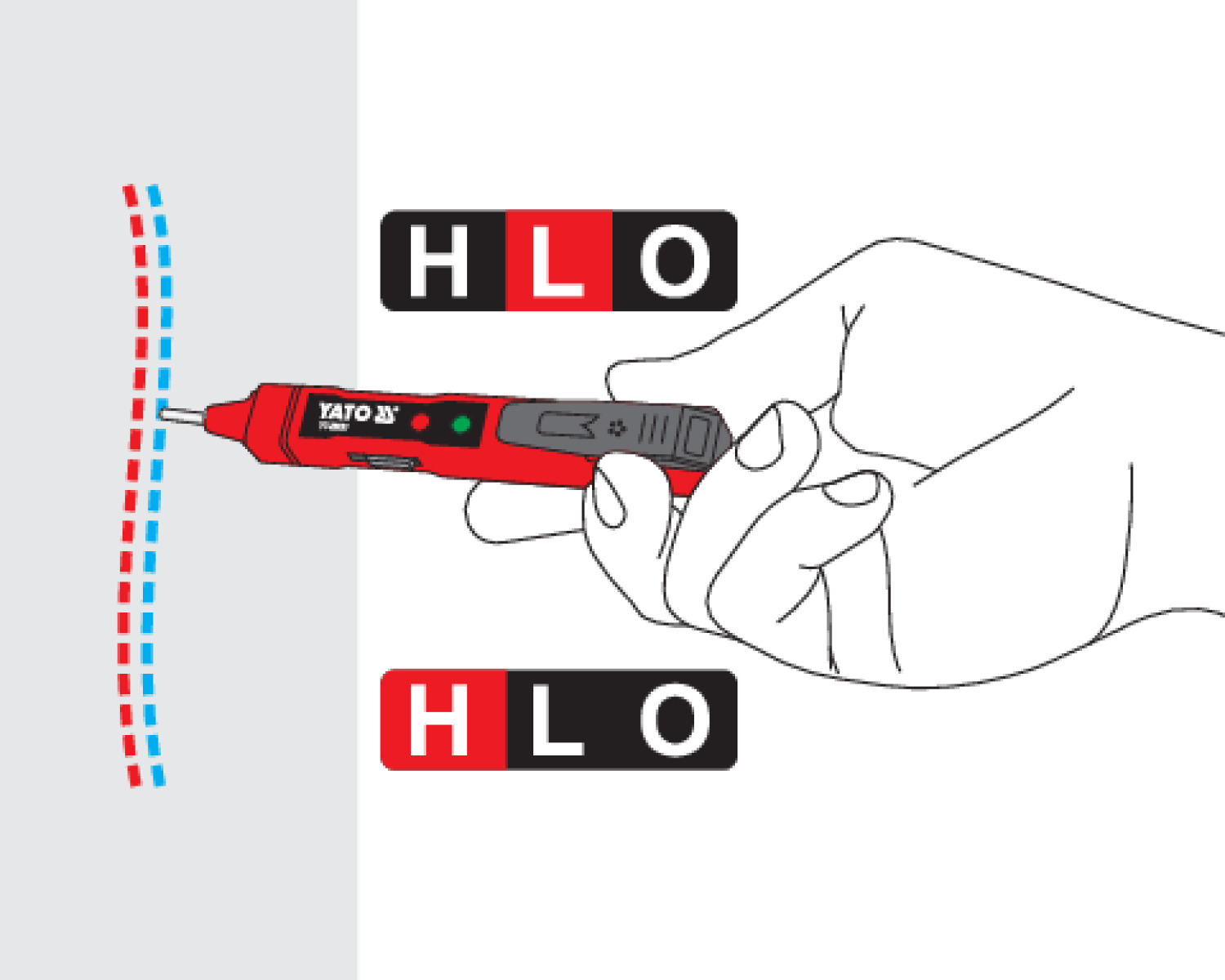
This method allows for non-contact detection of AC voltage, even behind walls. For example, to check for voltage in an insulated wire, set the tester to the [L] position. Then, holding the blade, bring the metal contact near the insulated wire without touching it. Illumination of the green LED along with a beep will indicate the presence of voltage in the wire being tested. Sensitivity can be increased by switching from [L] to [H]. This method also allows for non-contact detection of a break in a live wire; if there is a break, the tester will stop signaling voltage presence. Be cautious when searching for wires behind walls to avoid scratching the surface.
Usage warnings: